 Skip to content

 English
 Español
 Português
 Deutsch
 Français
 Русский
 العربية
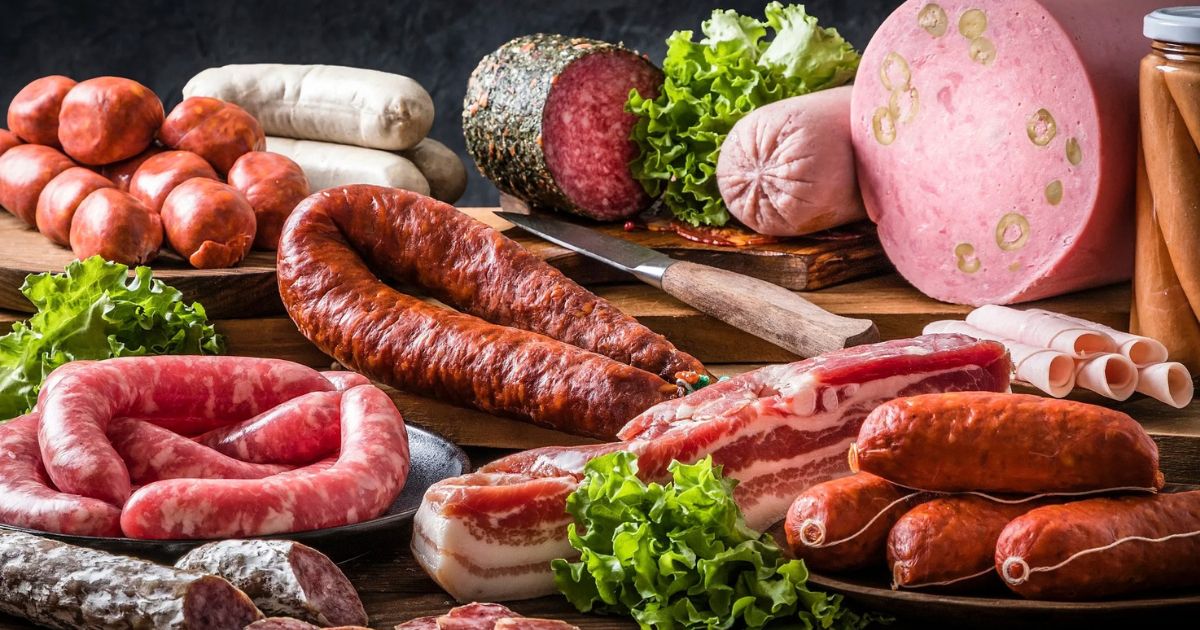
Choosing a carmine meat processing supplier is essential when formulating sausages, hot dogs, mortadella, and other processed meats. A high-quality colorant helps maintain the product’s appearance and color stability from one batch to another.
As a Peru-based manufacturer of natural food colorants, Imbarex, natural food color manufacturer, supplies high-grade natural carmine colorant E120 directly to food manufacturers worldwide. With exports to more than 80 countries and strategic branches in Mexico, Spain, and the United States, we provide a reliable and efficient supply chain for customers operating in international markets.
In this article, we’ll explore the main applications of natural carmine colorant in the meat processing industry, the differences between carmine lake and water-soluble carmine, U.S. regulatory requirements, and the key factors to consider when choosing a reliable supplier.
Article Summary
- Natural carmine colorant E120 provides a red color for sausages, hot dogs, frankfurters, bologna, hams, pâtés, and other processed meat applications.
- Different carmine formats offer different dispersion characteristics, making product selection important for specific meat formulations and processing conditions.
- Natural carmine colorant is listed by the FDA under 21 CFR 73.100 and is exempt from batch certification, while products containing carmine must declare the ingredient by name on the label.
- Properly selected and formulated carmine can help manufacturers achieve a consistent appearance across production batches.
- Carmine solutions can be used in a variety of processed meat formulations, including sausages, hot dogs, frankfurters, bologna, pepperoni, hams, pâtés, and meat spreads.
- Imbarex supplies Carmine E120 directly from Peru to food manufacturers worldwide, with export documentation and international logistics support.
- Carmine E120 is available with a minimum order quantity starting at 25 kg, with samples available for formulation and laboratory testing.
Why Choose a Carmine Meat Processing Supplier?
For sausage manufacturers and meat technologists, choosing the right carmine format can directly affect the appearance and performance of the final product.
Carmine is a natural red colorant derived from cochineal and is used in meat formulations where a consistent red tone is required.
However, its performance depends on the characteristics of the formulation and processing conditions.
Processed meats contain a complex combination of fat, protein, and water. Factors such as cooking temperature, pH, formulation, and storage can influence how the colorant behaves within the product matrix.
For applications where the color needs to remain well dispersed, carmine lake can be a suitable option. Unlike water-soluble forms, lake pigments provide color through dispersion rather than complete dissolution in the aqueous phase.
See the comparison below:
Carmine Lake vs. Water-Soluble Carmine
| Technical Parameter | Carmine Lake (Pigment) | Water-Soluble Carmine |
| Fat Matrix Dispersion | High compatibility with lipid-based formulations | Primarily suited to aqueous phases |
| Color Migration | Low potential for migration when properly dispersed | Greater potential for migration depending on formulation |
| Processing Stability | Good stability under appropriate processing conditions | Depends on pH and processing conditions |
| Visual Appearance | Opaque, natural red tone | More transparent red or pink tone |
Selecting the appropriate natural carmine colorant format can help manufacturers achieve the desired color and maintain a consistent appearance throughout processing and storage.

Carmine Applications in the U.S. Meat Processing Market
The U.S. processed meat market includes a wide range of products, including hot dogs, frankfurters, bologna, sausages, pepperoni, deli meats, and cooked or cured hams.
natural carmine colorant can be incorporated into different meat products depending on the desired color, formulation, and processing method.
The appropriate carmine format and dosage vary depending on the product matrix and manufacturing process.
Contact Imbarex to discuss your application and identify the Carmine E120 format best suited to your formulation.
Applications by Meat Type
Different meat formulations require specific carmine formats, concentrations, and processing conditions to achieve the desired color without negatively affecting the product’s texture or flavor.
| Meat Type | Recommended Carmine Format | Typical Concentration | Processing Stage |
| Sausages & Hot Dogs | Carmine Lake (10%–60%) | 50–200 mg/kg | Added during batter emulsification or cutter stage |
| Mortadella & Emulsified Meats | Carmine Lake (30%–50%) | 80–150 mg/kg | Blended during fine fat-protein reduction |
| Cooked & Cured Hams | Water-Soluble / Acid-Stable | 30–100 mg/kg | Incorporated through brine injection solution |
| Pâtés & Meat Spreads | Oil Suspension / Carmine Lake | 50–120 mg/kg | Mixed directly into the warm lipid phase before cooling |
Actual usage levels may vary depending on the formulation, desired color intensity, processing conditions, and applicable regulatory requirements.
Product trials are recommended to determine the appropriate dosage for each application.

U.S. Regulatory Requirements for Carmine Meat Processing
For U.S. manufacturers, regulatory compliance is an important consideration when sourcing carmine and other food color additives.
Carmine is listed by the U.S. Food and Drug Administration (FDA) under 21 CFR 73.100 as a color additive exempt from batch certification. Foods containing carmine must declare the ingredient by name in the ingredient statement rather than using only generic terms such as “artificial color” or “color added.”
For manufacturers selling processed meats in the United States, understanding both the permitted use of the color additive and its labeling requirements is an important part of product development and ingredient approval.
Key Regulatory Reference
| Authority / Region | Standard / Reference | Application |
| United States FDA | 21 CFR 73.100 | Carmine and cochineal extract as permitted color additives exempt from batch certification |
| European Union | EU Regulation 1333/2008, Annex II | Permitted food color additive E120 for applicable food categories |
| Brazil / ANVISA | Resolução RDC 44/1977 | Regulatory reference for applicable food uses in Brazil |
Regulatory requirements can vary according to the product category, formulation, market, and final application.
Manufacturers should verify the requirements applicable to their specific product before commercialization.
What to Look for in a Carmine Meat Processing Supplier
Selecting a carmine supplier involves more than comparing color concentration or price.
Meat processors need a consistent ingredient that performs reliably under their specific formulation and processing conditions.
When evaluating a carmine meat processing supplier, manufacturers should consider:
- Color consistency: Reliable performance from batch to batch is essential for maintaining a uniform product appearance.
- Dispersion: The carmine format should be compatible with the fat, protein, and water phases of the formulation.
- Processing stability: The color should withstand the temperatures, pH conditions, cooking, and storage requirements of the final product.
- Technical documentation: Specifications, Certificates of Analysis (CoA), and other quality documents help support ingredient approval and quality control.
- Samples and trials: Testing the ingredient in the actual meat formulation allows manufacturers to evaluate color performance before full-scale production.
- Supply reliability: Consistent production capacity, export experience, and international logistics can help reduce the risk of supply interruptions.
For manufacturers sourcing ingredients internationally, the ability to provide consistent documentation and technical support can be just as important as the ingredient itself.

Global Supply Chain and Export Documentation
Working directly with a specialized carmine meat processing supplier with international experience can simplify sourcing and logistics for food manufacturers.
Imbarex manufactures natural carmine colorant E120 in Peru and exports its food and natural colorants to more than 80 countries. Strategic branches in Mexico, Spain, and the United States support international operations and customer service across different markets.
Depending on the destination and customer requirements, export documentation can include Certificates of Analysis (CoA), bills of lading, sanitary documentation, product specifications, and other documents required for international trade.
For U.S. manufacturers, a reliable supply chain can help support ingredient approval, quality control, customs procedures, and continuity of production.
Why Choose Imbarex as Your Carmine Meat Processing Supplier?
Imbarex supplies natural carmine colorant E120 directly from Peru to food manufacturers and distributors worldwide.
With international export experience and a presence in key markets, the company provides natural color solutions for a range of food applications.
For meat processors, available support can include:
- Carmine E120 for different meat processing applications
- Product samples for laboratory and formulation trials
- Technical documentation and product specifications
- Certificates of Analysis (CoA)
- International export documentation
- Direct supply from Peru
- Flexible international logistics
- Minimum order quantities starting at 25 kg
Whether you are developing a new sausage formulation, scaling up production, or looking for a reliable backup supplier, choosing the right carmine format and supplier can help ensure consistent color performance throughout your production process.
Contact Imbarex to discuss your application, request a Carmine E120 sample, and find the solution best suited to your processed meat production.
Frequently Asked Questions
Is carmine approved for use in food products in the United States?
Yes. Carmine and cochineal extract are listed by the FDA as permitted color additives under 21 CFR 73.100 and are exempt from batch certification, subject to applicable regulatory requirements.
How should carmine be declared on a U.S. food label?
Foods containing carmine must declare the ingredient by name in the ingredient statement. It should not be identified only through generic terms such as “artificial color” or “color added.”
Why is carmine lake used instead of water-soluble carmine in sausages?
Carmine lake is a pigment designed to remain dispersed within the product matrix, including the fat phase of meat formulations. This makes it a suitable option for sausages and other processed meats where color dispersion within a complex fat-protein matrix is important.
Is Carmine E120 approved for sausages in the European Union?
Yes. Carmine E120 is a permitted food color additive under EU Regulation 1333/2008, Annex II, for applicable food categories, including certain meat products. Manufacturers should verify the specific conditions of use for their product category.
Can I request a Carmine E120 sample?
Yes. Samples can be provided for laboratory, bench-scale, and pilot testing to evaluate the color performance of Carmine E120 in a specific meat formulation.
What documents are available for international orders?
Depending on the destination and order requirements, documentation may include Certificates of Analysis (CoA), product specifications, sanitary documentation, bills of lading, and other export documents required for international shipments.


